Wild Camping in Southern Africa: What It Is and How to Do It Right
Wild camping is one of those things that means different things to different people. For some it's sleeping under the Milky Way with nothing around for 50km. For others it's pulling off a gravel road after dark and hoping nobody knocks on the window at 2am. Both count.
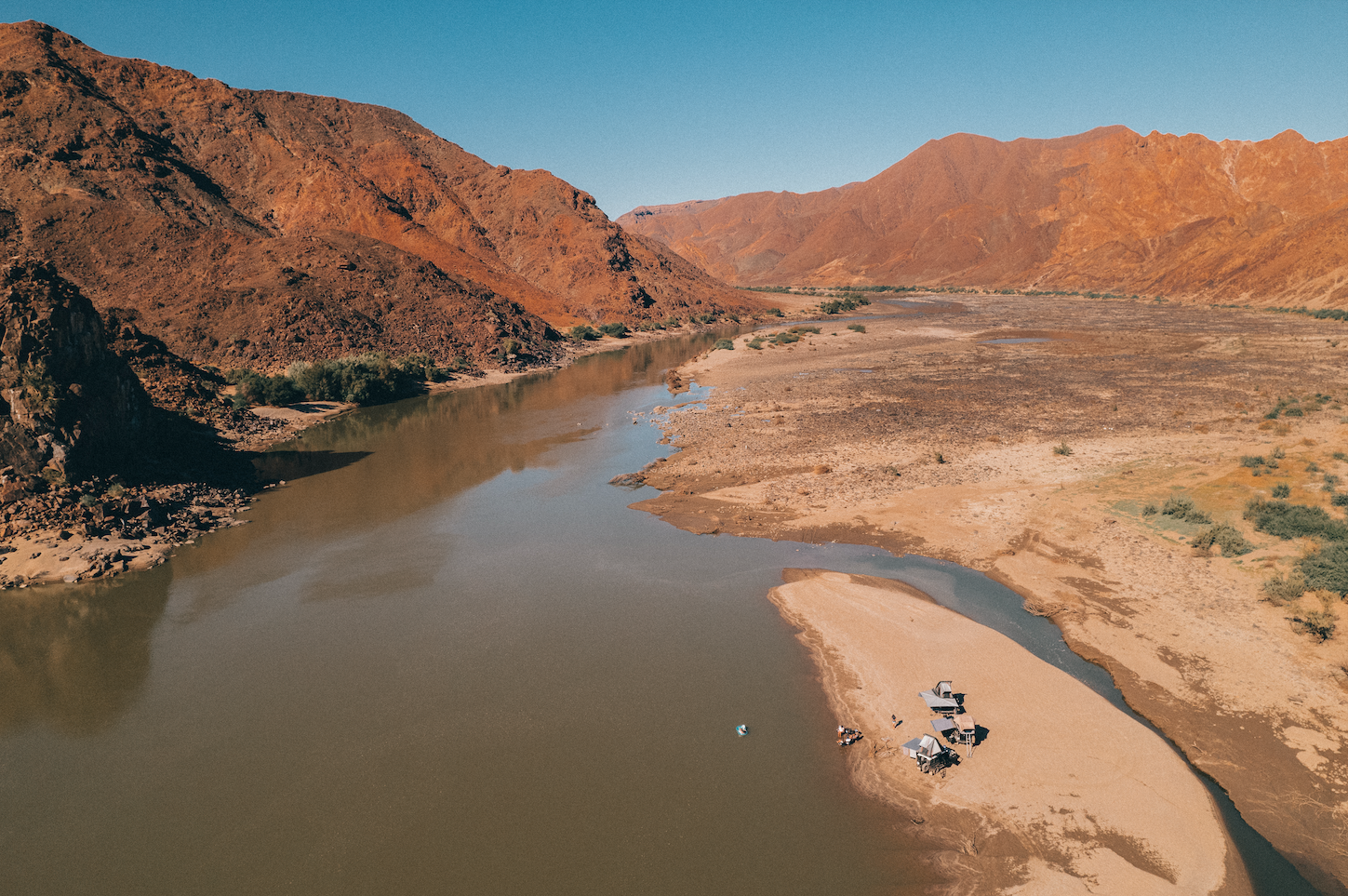
Wild camping is one of those things that means different things to different people. For some it's sleeping under the Milky Way with nothing around for 50km. For others it's pulling off a gravel road after dark and hoping nobody knocks on the window at 2am. Both count. But if you're going to do it - especially out here in Southern Africa where the terrain, distances, and conditions are not forgiving - it's worth understanding what you're actually getting into.
What Is Wild Camping?
In our view, Wild camping is camping outside of a designated, managed campsite. No ablutions, no reception, no booking confirmation. You pick a spot - whether it's a river bank, a hilltop, a patch of bush or a quiet stretch of road reserve - set up, and leave no trace.
It's the closest thing overlanding has to its original spirit: self-sufficient, off the beaten track, on your own terms.
In South Africa and the broader SADC region, wild camping is common practice - especially on long-haul routes through Namibia, Botswana, the Richtersveld, or the more remote stretches of Limpopo and the Northern Cape. Distances are big, facilities are few, and sometimes a proper campsite is just not on the route.
But that freedom comes with responsibility. More on that in a moment.
What to Consider Before You Pull Off and Set Up
Wild camping is not complicated, but it does require more thought than pitching up at a campsite with hot showers and a bar.
Land ownership and permission
This is the big one. In South Africa, most land is either privately owned or state land - and you need permission to camp on it. That means finding out who owns the property and asking. Sounds simple, but people skip this step constantly.
On private farms, the answer is usually as easy as stopping at the farmhouse and asking. Most farmers in the Karoo, Northern Cape, or Namaqualand are decent people who'll either say yes, give you a better spot than the one you found on Google Earth, or politely tell you to move on. Don't just park in someone's veld and hope for the best.
On state and municipal land, it gets murkier. Some areas technically allow dispersed camping; others don't. National parks in South Africa require you to be in a designated camp by gate closing time - no exceptions. Wilderness areas managed by Cape Nature or Ezemvelo have their own rules. Do your homework before the trip.
Fire
In dry conditions - which is most of the year across a big chunk of Southern Africa - an open fire is either restricted or outright banned. Know the status before you light anything. One careless fire can burn for days.
If you do have a fire, build it in an existing ring where possible, keep it small, and make absolutely sure it's dead before you sleep or leave. Dead means cold ash, not just low flames.
Water and waste
You're responsible for your own water and for what you leave behind. Grey water from dishwashing needs to be dispersed well away from any water source. Human waste needs to be buried - proper cat holes, minimum 60 metres from water, trails, or camp. Pack out all your rubbish, including food scraps that will attract scavengers or leave a smell.
Wildlife
Camping outside of fenced reserves brings a different level of exposure to wildlife. Depending on where you are, that could mean porcupines rooting through your kit, baboons raiding your cooler box, elephants walking through camp, or something with teeth that you'd rather not encounter. Know what's in the area. Store food properly. Don't sleep with snacks in the tent.
Weather
Without campsite infrastructure, you're exposed. The Drakensberg can go from warm to dangerous in under an hour. The Kalahari goes cold at night even in summer. The Northern Cape gets wind. Set up with the conditions in mind, and don't rely on a signal to check the forecast - download it before you leave.
The Ethics of Wild Camping
This is where it gets interesting - because the overlanding community is not always consistent on this one.
There's a version of the wild camping conversation that frames it as: "I've got all my kit, I'm self-sufficient, why do I need to pay anyone?" And we get it. The whole point of overlanding is independence. But that framing misses something important.
When you wild camp instead of paying for a site, someone loses revenue.
In a lot of remote areas, those campsites - whether they're a local community project, a private conservancy, or a small family operation - are directly tied to the economy of the place. The Richtersveld, the Caprivi Strip, parts of Namibia and northern Botswana: these are places where tourism income is a genuine lifeline. When you bypass the campsite and sleep in the bush for free, that's money that doesn't go into the local community or into maintaining access for the next traveller.
That's not a guilt trip. It's just reality.
Our take: Wild camping has its place. Long transit days, limited options, genuine remote stretches where there's nothing for 200km - absolutely use your self-sufficiency. That's what the kit is for. But when there's a community campsite or a small private farm camp in the area, pay for a night. It's usually cheap, it's often better than a bush spot anyway, and it keeps the access open for everyone.
The overlanding community talks a lot about preserving wild places. Paying for sites in those wild places is part of how that actually happens.
Leave no trace - every time, without exception
Whether you wild camp or pay for a site, leave the place better than you found it. Pack out everything. Don't cut branches or move rocks unnecessarily. Don't wash in rivers. Don't feed anything. This is not complicated, but it needs to be the standard, not the exception.
Wild Camping Spots on OVRLNDR
We've been building out the OVRLNDR campsite directory specifically to capture spots that don't show up on the mainstream booking platforms - including community-run sites, farm campsites, and more remote options across South Africa and the wider region.
Some of these are free or nearly free. Some are paid.
Browse wild camping spots on OVRLNDR
Note: you do need to be an Expedition Member to access to wild camping spots.
If you know a spot that should be on there - add it. The directory only gets useful if the community puts in what they know.
Been somewhere properly wild lately? Drop it in the comments or tag us on Instagram - we'd love to hear where people are ending up.