Camping with a Baby or Toddler in Southern Africa: How to Make It Work in the Bush
Taking a baby or toddler overlanding in SA is doable - if you set up right. Real tips on sleep, safety, gear, and where to camp, from people who've done it.
You do one trip with a newborn on the way and suddenly everyone tells you the bush years are over. Sell the roof tent. Buy a caravan. Get a timeshare in Langebaan. We've heard it all - and we're here to tell you it's not true. Taking a baby or toddler overlanding is absolutely doable. It's different, yes. It takes more planning. But it doesn't have to mean trading your rig for a minivan and a KidZania membership. Here's what actually works, from families in the SA overlanding community who've figured it out the hard way.
Start with honest expectations
The first thing to let go of is the idea that a trip with a small child will look like your pre-kid trips. It won't. You'll drive shorter distances. You'll stop more. You'll be up earlier than you want to be - not because of the bush, but because toddlers don't understand lie-ins.
What you gain is a completely different experience. Slower, more deliberate. Better campfire cooking because you're not racing to the next waypoint. Your kid's first time seeing an elephant at a waterhole will do something to you that no solo trip ever could.
The overlanders who struggle most are the ones trying to recreate their old trips with a baby strapped in. The ones who thrive are the ones who redesign the trip around the child from the start.
The sleep setup is everything
Nothing derails a bush trip faster than a baby who won't sleep. Sort this out before anything else.
Rooftop tents and babies don't mix. The ladder alone is a problem, but the bigger issue is that you can't safely have a sleeping infant in an RTT while you're moving around camp at night. If you're still running a rooftop tent setup, it's time to consider making the switch - either to a ground tent or a vehicle-based sleep setup.
The most practical options for families:
- Ground dome tent (separate from adults where possible): A quality freestanding tent like an entry-level Hilleberg, a Quechua, or even a good local canvas dome lets you set up a proper sleep space for the baby without crawling around each other at 2am. Light, fast, and low to the ground.
- Rooftop cot or flat vehicle deck: If you have a canopy bakkie or a Land Cruiser with a flat load bay, a foam mattress and proper blackout curtain setup inside the vehicle keeps baby in a familiar, contained space. Works especially well for naps.
- Bassinets and travel cots: The Phil & Teds Traveller and the Snuz SnuzPouch both pack small and set up fast. For toddlers who have transitioned out of a cot, a small self-inflating mattress in their own tent corner is enough.
Whichever route you go - keep the sleep environment as consistent as possible from home. Same sleeping bag liner, same white noise (download an offline app - there's no signal at Nossob), same bedtime routine. The more familiar it feels, the better everyone sleeps.
Vehicle setup for travelling with small kids
Your rig needs a few adjustments before you head out, and none of them are expensive.
Rear seat organisation: A small soft cooler bag wedged into the footwell for snacks and bottles keeps you from stopping every 40km. Add a seatback organiser with a tablet mount for longer stints on corrugated roads - even babies who don't watch TV yet will be mesmerised by a white noise loop on a screen.
Temperature management: South African heat in the Kalahari or Limpopo can push into the high 30s and 40s. A quality rear window shade is non-negotiable. If your vehicle doesn't have rear aircon vents, a small 12V USB fan aimed at the car seat makes a real difference. Park in shade wherever possible - even 15 minutes in a sealed car in summer heat is dangerous for an infant.
Car seat: Check that your car seat is properly rated and installed before you go anywhere near a corrugated road. A well-fitted Maxi-Cosi or Britax handles the vibration fine. Loose-fitting or expired seats are a real risk on rough terrain.
Dust: Kalahari and Namibian dust gets into everything. A thin Merino layer over the baby is better than nothing, and a proper zip-up pram bag or sleeping bag keeps the dust off during transfer. Seal nappies and wipes in a dry bag or ziplock - a dusty wet wipe is useless.
What to pack that you wouldn't normally think of
The usual overlanding gear list stays mostly the same. These are the additions that make the difference:
- Portable camp bath: A Babydam bath or a simple collapsible bucket works. Bush baths are genuinely one of the best parts of camping with a baby - a warm bucket outside under the stars beats any bathroom.
- Nappy and waste system: Pack a small dry bag as a dedicated nappy bin. Seal used nappies in scented nappy bags. Most campsites in SA have bins but some remote sites don't - plan to carry your waste out if needed.
- Baby-safe insect repellent: DEET is not safe for infants under 2 months, and should be used carefully on young toddlers. Incognito or Natrapel are lower-DEET or DEET-free options. A mosquito net over the sleep area is worth more than any spray for under-6-month olds - especially in Botswana and Mozambique.
- First aid for kids: Your standard kit needs an upgrade. Add infant paracetamol (Panado syrup), an oral rehydration sachet, an antihistamine syrup, and saline drops. Know the nearest hospital to wherever you're camping - download the location offline before you go.
- Sun protection: A UV-50+ swim shirt and a wide-brimmed hat does more than any sunscreen. For babies under 6 months, the advice is no direct sun at all - a good campsite tree is your best friend.
- Snack logistics: Toddlers on long drives need frequent, accessible snacks. Peel and eat, no mess. Rice cakes, banana chips, squeeze pouches, and biltong (for slightly older toddlers) are all easy. Avoid anything that melts in the heat.
Where to camp with small children
Not every campsite is equal when you've got a baby in tow. Here's what to look for:
Ablutions: You need running water and a reasonably clean bathroom. You can rough it when it's just you - with a baby, blocked drains and squat loos are a different proposition. Check campsite reviews before booking.
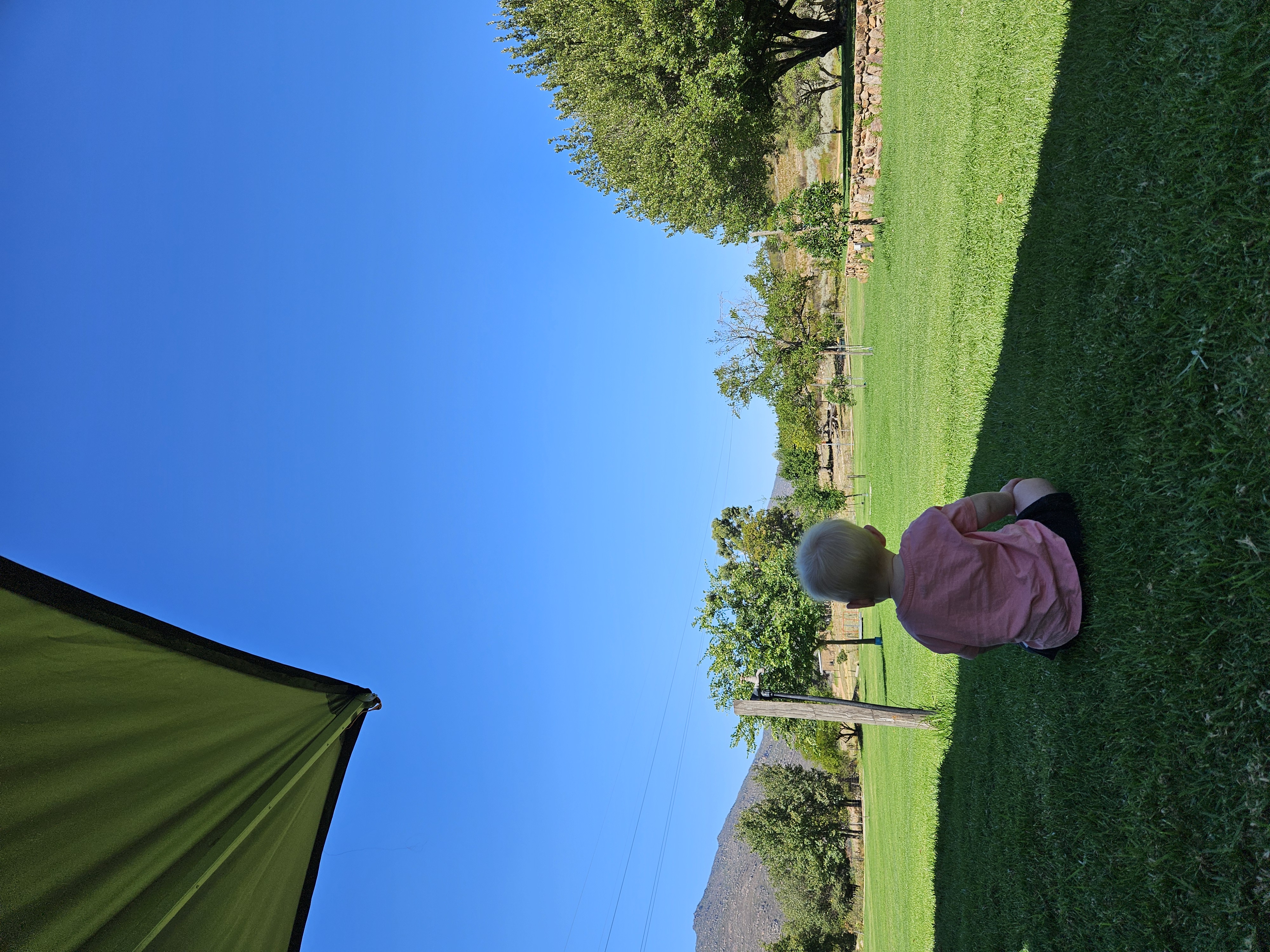
Shade: Non-negotiable. A shaded site makes the difference between a comfortable camp and a miserable one when the temperature climbs past 35°C. Ask specifically - "shaded site" means different things to different campsite operators.
Fencing or containment: Once a toddler is mobile, an unfenced campsite near water or wildlife is genuinely stressful. Enclosed camps, or sites with a natural boundary, give you the ability to look away for 30 seconds without a cardiac event.
Distance from facilities: You will be doing more trips to the bathroom at night than you ever expected. A campsite 400 metres from the ablution block with a toddler in your arms at 3am is nobody's idea of fun.
Some solid picks from the community for family-friendly 4x4 camping in SA:
- Boulders Bush Lodge (Limpopo) - shaded, fenced, family-friendly facilities, close to the Waterberg
- Suikerbossie (Cederberg) - river access, beautiful setting, reliable ablutions
- Kgalagadi — proper SANParks facilities, stunning setting, manageable for young children
- Addo Elephant NP (Eastern Cape) - fenced camps, excellent ablutions, genuine wildlife without remote logistics
Browse family-friendly campsites on OVRLNDR
The gear transition that most parents make
The rooftop tent conversation is unavoidable. Most overlanding parents we've spoken to make the switch when the baby starts rolling - typically around 4 to 6 months - because the RTT becomes genuinely unmanageable. A sleeping pad and a quality ground tent is lighter, faster to set up, and infinitely safer.
The good news: your roof rack doesn't have to go anywhere. Use it for storage - a roof rack loaded with gear leaves your rear load bay free for the sleep setup. Front Runner's rack with slide-out drawers or a simple lash-down system for dry bags works well. You keep the storage capacity, lose the tent, and gain a much saner camping setup.
Once the kids are around 5 or 6 and can handle a ladder responsibly, the RTT conversation can come back up. Until then - it's a ground game.
A few things nobody warns you about
The nap window is your driving window. If your child sleeps 1.5–2 hours in the car, structure your driving day around it. Leave camp after the morning feed, drive through the nap, arrive and set up before they wake up. It sounds calculated, but it genuinely makes the day work.
Campfires and toddlers are a full-time job. You already know this. A folding camp barrier or a simple cooler box placed strategically keeps wandering legs out of the braai zone without constant intervention.
Other campers are generally brilliant. The overlanding community in SA is overwhelmingly warm and helpful to families. You'll get offered firewood, babysitting offers from strangers who turn out to be grandparents, and more unsolicited advice than you can handle. Take the help. It's genuine.
You'll question yourself the first night. The first time a baby cries in a tent at 2am and you're thinking about scorpions, cold, heat, or just wondering what you were thinking - that's normal. It passes. By trip two, you'll have a system. By trip three, you'll wonder why anyone stays in hotels.
Our take
Bush camping with a baby or toddler is one of the most rewarding things you can do as a family, and one of the most underrated decisions you can make for your kid. Kids who grow up in the bush grow up differently - and we mean that in the best possible way.
It takes more planning, more gear thought, and a genuine reset of expectations. But the community is supportive, the campsites are getting better, and there's almost no trip in Southern Africa that can't be adapted for a small child with a bit of thought upfront.
Start close to home. Do a one-night shakedown at a campsite you know well. See what works and what doesn't. Then push the range out from there.
You've still got years of proper trips ahead of you. They're just going to look a bit different - and honestly, better.
If you're camping with little ones and have figured something out that we haven't covered - find us on Instagram. The best tips in the community always come from parents who've already broken something and found a better way.